

T/W: Housing Violence, Anti-Blackness, State Violence/Neglect, Death Mention
Why do roots grow downwards? What signals to a plant that it needs to sink deeper into the soil in order to hold a lower position necessary to find balance and sustenance?
A geotrope is ‘a plant or fungal structure that grows in response to gravity’. Geotropism describes the movement or orientation of a plant’s parts, with positive gravitropism describing the nature of roots, which grow towards gravity, a response that uses the pull of this force of attraction to orient the plant towards maximal nourishment and stability.The weight of infrastructural housing precarity within the current landscape feels largely like an immovable and inescapable force. Across the UK, the waiting list to get into social housing reached highs of over four years in Birmingham and up to ten years in London in 2025. The conditions of these council houses are below the standard of living and can be fatal. An investigation into Lewisham Council housing showed that 92% of the housing was poorly managed, and 25% of them not meeting the Decent Homes Standard as of September 2024. These problems exist across the UK, but almost always disproportionately affect Black people, resulting in poor health conditions and even death.
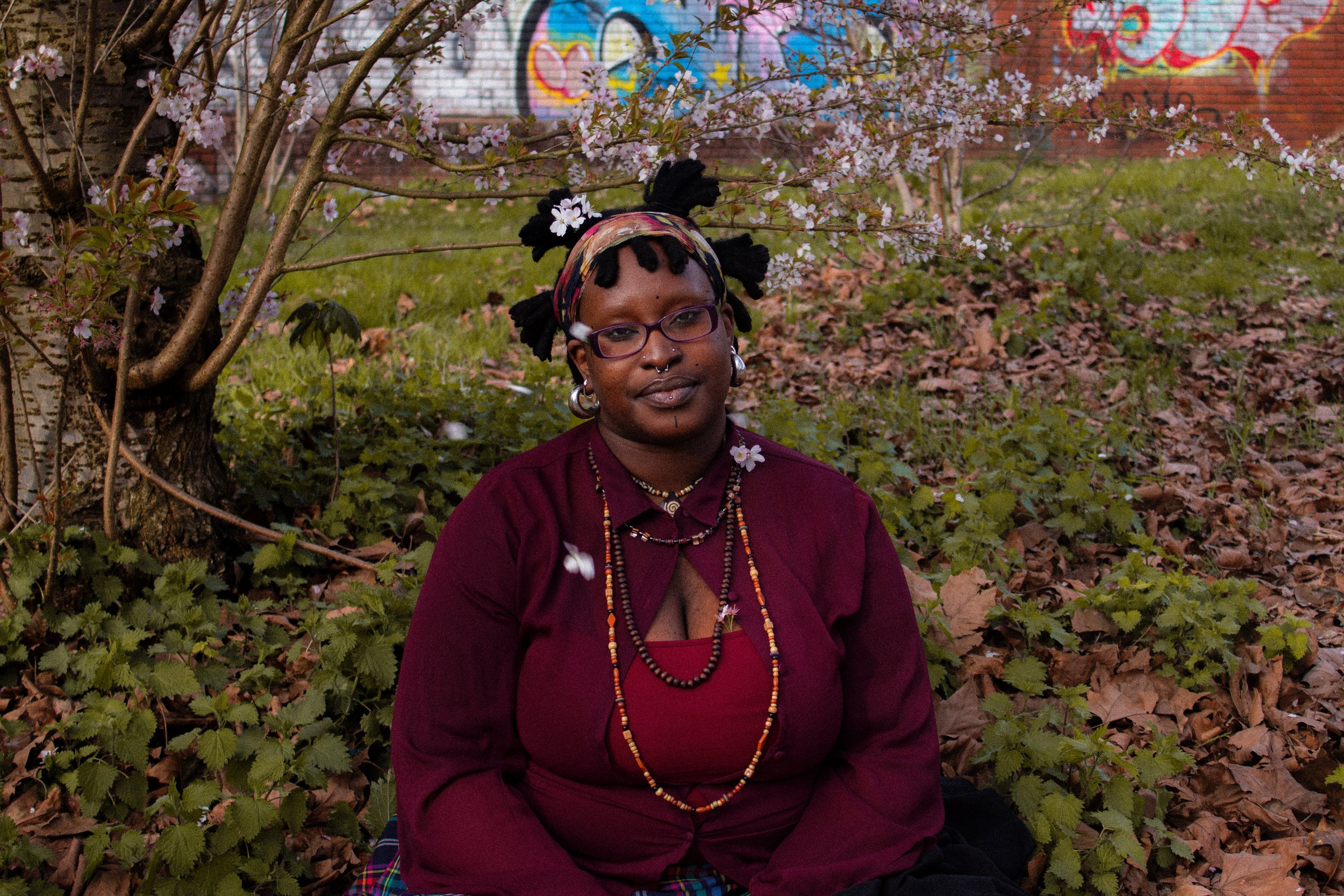
In the midst of this multi-layered crises of dissettlement, Blaq Roots, a Black FLINTA (Female, lesbian, intersex, non-binary, trans and agender) housing cooperative have responded to this gravity by using it as a reference point, growing down to address the critical need to heal and support Black FLINTA kinfolk trying to live in these hostile environments. Using our current context as a site of not complete subsummation but orientation, Blaq Roots have dedicated themselves to creating affordable communal housing for our communities. Recently awarded £75,000 in funding over the next few years, they stand at the beginning of a seminal new chapter following a journey of determined care and survival. Blaq Roots describe their movement as one that is both ‘consensus driven and prioritises collective care.’ We call their building of sustainable living structures as geotropes of hope within landslides of grief.
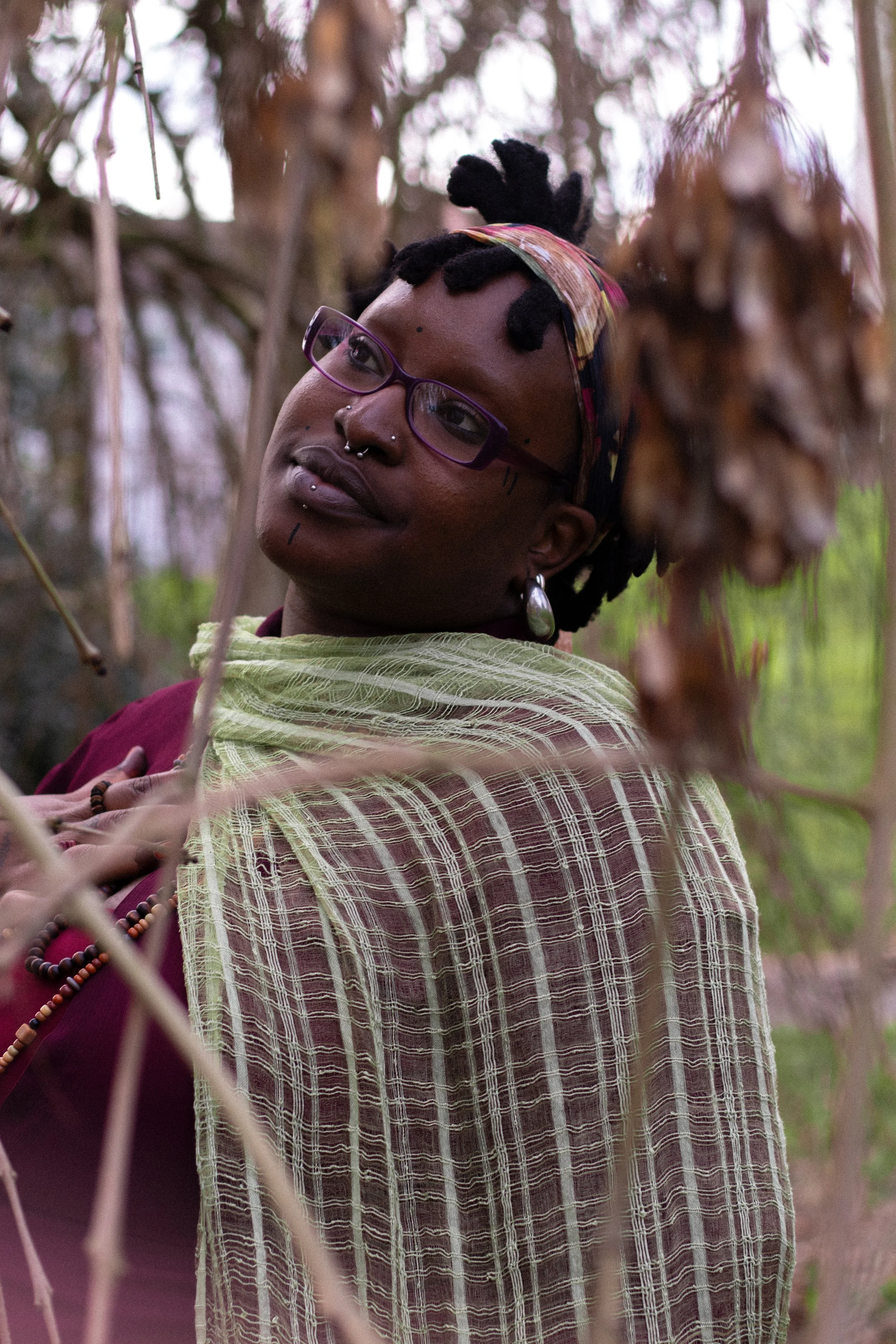
We sat down virtually to converse with Muva, one of Blaq Roots’ founders, to learn more about the co-op’s revolutionary work addressing the infrastructural oppression of housing insecurity foundational to the state of UK houselessness.
Blaq Roots, Muva tells us, was born out of a dynamic of Black queer love; from a relationship between Muva and Destiny, their Black darkskin partner, and also a protective communal self-love of Black preservation to escape dominant systems of anti-Blackness prevalent within other housing collectives. Crucial to their journey, Muva tells us, was finding routes to building alternative and autonomous communal structures.
The existing conditions of housing violence are foundational to understanding the housing issue faced by Black people, but particularly marginalised Black people. In a nation dedicated to utilising its function as a tool violence to further disenfranchise denizens on the lines of gender, disability and citizenship, it naturally follows that those who fit in multiple or all of these categories find themselves in what Muva refers to as ‘fundamental insecurity’:
‘What brought us to homelessness was the colonialist, capitalist structures of housing,’ they explained. ‘Because of that, I don’t stake any life I’m building or any future I’m moving towards with any rigid sense of security.’
Squatting came to be a way to survive these harsh conditions as a means of necessity. A lot of the conditions in squats can be difficult – Muva explains the difficulties of securing buildings and accessing clean water, electricity and heat, especially in the winter months. Squatting in residential buildings carries the risk of incurring even more insecurity. If you’re caught squatting in residential buildings, it can lead to 6 months in prison, a £5,000 fine or both. Both of these punitive measures and the countless others police leverage against squatters only push people further into precarity. Emotionally, too, there is the extant presence of grief – of having to leave, of the constant evictions and, Muva expresses, of ‘actually losing people’.
Necessity drives action. There remained the drive to physically secure housing by whatever means necessary – sometimes having to resort to creative means by which to find somewhere they could make stable. Muva describes these efforts as ‘inspiring’ – that people were tasked with understanding what tools (literal and figurative) were necessary to have in order to physically secure space. But as much effort as it takes to physically secure a house, Muva asserts that emotional needs of a household – that ‘unseen but constant labour that is required to make a house a home’ – often is eschewed. Muva, coming from a Nigerian background – understands and sympathises with the impulse. ‘Relationships are superfluous when prioritizing survival’, but it became increasingly clear that housing was more than just finding and maintaining a roof over one’s head.
The global majority squat Muva was living in presented many challenges – the division of labour within the squat and its failure to address unconscious biases meant that inequitable division of the labour ran along lines of race, complexion, gender and class. Although there were conversations about making sure that intersectionality was kept in mind when it came to managing the house – distributing labour according to need and disability, the predominance of people from middle-class backgrounds who did not have a history of organising survival amidst material scarcity, meant a lack of ability to visibilise and deconstruct internalised modes of misogynoir that forced Black women and femme squatters into being burdened with all the emotional caretaking – these issues cropped up and in its infrastructural repetition, anti-Blackness once again reared its ugly head:
‘Even though there was an active statement to keep [the harmful structures of] whiteness out of the house, the more approximate someone was to whiteness the more informal authority and careless anti-blackness they enacted.’
Black people ‘came to be heavily relied upon’ in this global squat – welcoming new people in and making the squat feel homely and comfortable was something Muva cites as being the burden of other Black people. ‘Even within these radical places, when we have no liberatory infrastructure to rely upon, we will fall back on the structures that exist; the structural ideologies of ableism, misogynoir, classism that exist within the space will keep going regardless of the strains upon them, upon us.’
Muva talks about there being a fundamental grief that permeates one's being when existing in this state:
‘It’s like you’re always having to pack up and re-set [yourself] somewhere else; it’s having to do that at the same time as you’re trying to build something. Constantly being broken down.’
Blaq Root’s work took form amidst the tensions and ruptures existent within the global majority squat, choosing to splinter away into a dedicated group for Black FLINTA kin centred around mutual care. They had their first meeting in 2024 and it was imperative for them to take the lessons they learned from previous squats they’d lived in as well as brainstorm ways to mitigate replication of harms they’d suffered previously. Muva referenced the co-ops collective roots, which they noted as rhizomes drawn from the lives of Black women thinkers and organisers across the diaspora including Olive Morris, Elizabeth Obi, Nanny of the Maroons, June Jordan and Assata Shakur, amongst others. Their philosophies regarding the agency of Black people (and specifically Black femmes) remain intrinsic to the mission of Blaq Roots. Their foundations can be understood by a quote emblazoned plainly in their moodboard:
‘We acknowledge that the working collective wellness is a big part of Black feminist politics, but I’m not sure healing and wellness is integrated in the political organisations that we build, and I think that remains one weak point of our politics and practice.’
It was from the axis of this weak point, the seeming rift between politics and practice that Blaq Roots began to realise this lack of integral wellness and care within the work was not a gap or mistake but itself the central force that facilitated the fundamental insecurities contained within squatting in the first place. This was not a lack of capacity, or even inevitable neglect, both of which the system uses as excuses to mask its driving force, but the very axis which allows the system to continue turning. In this epiphany, Blaq Roots realised that to uproot the very insecurity and extraction they were experiencing they would need to plant not just housing work, but infrastructural housing work that centred the very relations seen as invisible, disposable and extractable at its centre.
This realisation planted the seed of their vocation into becoming a geotrope, not simply an antithesis to a system but a structure whose orientation is fundamentally rooted against the direction of current violence, using it as a guiding force for the growing towards the ‘depth of being, time and space’ needed to sustain ‘rooting work’ that could outgrow the nature of violently insecure housing itself. Assuming this radical position to create the healing structures needed to form its antithesis, is something Muva tenderly describes to us as ‘homing work.’
Muva reflects on the initial naivety employed when formulating Blaq Roots– how eager they were to get the material needs met, like securing land and a building, following in the footsteps of historical and contemporary community-based housing initiatives, but how that was tempered with the foundational work that goes into actually connecting with people.
‘[There was] a period of trial and error. We tried to do a program called ‘Getting Rooted’ that would give folks an opportunity to tap in regularly. Initial programs existed to give life to this living breathing manifesto… but it became clear to us that our community desired for our work to be shaped with and through their needs, their engagement, not just to be another ungrounded space marketed to them as opposed to an intentional space shaped by us all.’
In many ways, the early days were like re-experiencing the realisation that investing in emotional labour was necessary to build a housing initiative. ‘We needed to make room for accountability. It was heartbreaking but in a very profound way; it hurts to know when you’ve hurt those you’re organising better worlds with, but it’s an honour to know that you’ve been trusted with the work of holding yourself accountable and doing better.’
Elders and other community members emphasised the importance of understanding the slow attentiveness and fluidity needed to build a sustainable practice. ‘It’s one thing to have a vision and be in the building stage, but it’s important to know how to sustain ourselves materially, physically, emotionally and spiritually.’
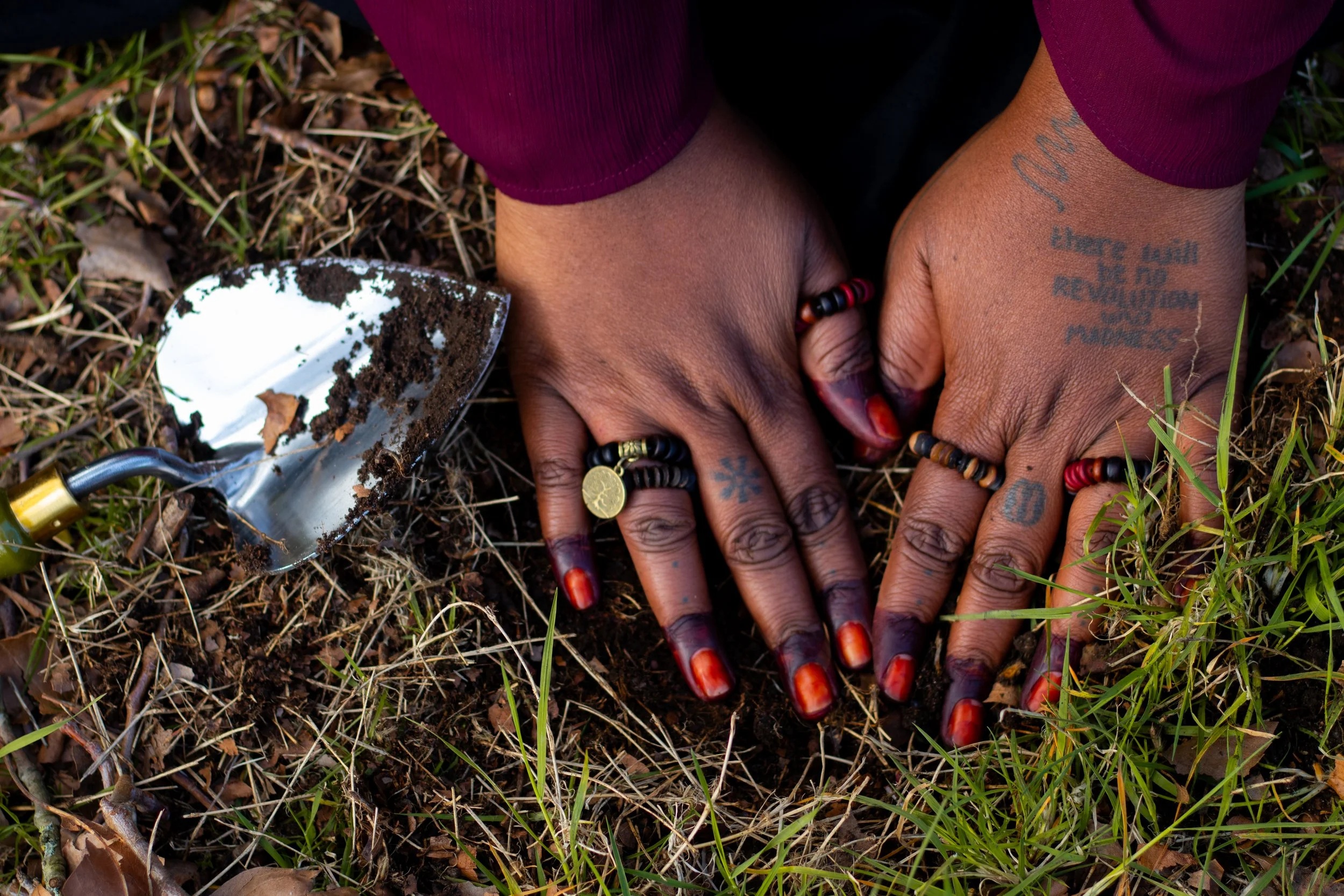
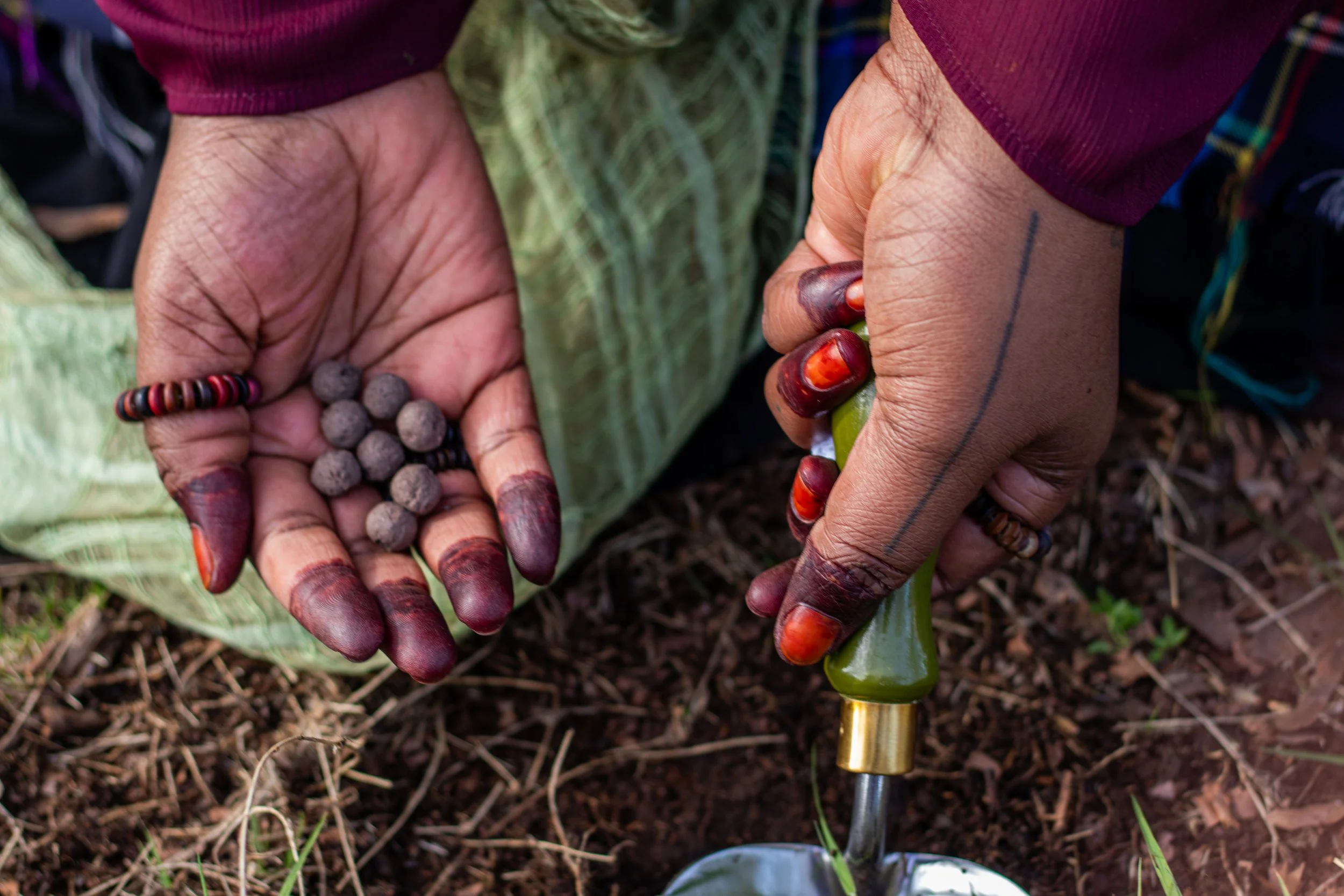
Presently, Blaq Roots are poised towards nourishing futures for Black housing sustainability. Their collective efforts have led to a successful bid for a grant of £75,000 over four years, opening up a pathway for a Black queer community housing infrastructure that feels revolutionary given the times we’re in. Muva honours organisations like the now composted Decolonising Economics as kindred spirits who helped develop their thinking, helping them ask questions like ‘What skills, practices and structures do we actively have within and amongst ourselves that means that we can do things differently?’ In order to root properly there’s a wiseness to resisting the fundamental urgency that could spurn them into hasty action that comes from their proximity to precarity and understanding what pace stability truly lies at.
Muva laughs as we quip together about urgency still remaining a tool of the white man – trying to get people to feel like slower timelines mean wasting labour and missing potentials of critical opportunity under the guise of an ungrounded style production that is ultimately untenable and leads to short-term progress that defends without the structures of depth necessary for sustainability and true liberation; short-term solutions that accumulate into long-term mistakes. ‘It’s one hundred percent a tool of white supremacy,’ they agree. Fortunately, this grant money gives Blaq Roots the room to strategise sustainable growth over several years. Explicit emphasis is placed not only on the physicality of infrastructure but the irreplaceable necessity of building slowly and carefully, connecting relations in small and deliberate ways: ‘Whether it’s dinners and sitting down in intimate spaces to invite people to come and work with us, we want to give people space to ask questions and insert themselves. How do we recognise the difference between how generative or disabling urgency feels when we organise? How can we resist the way urgency would have us rush past the debilitating conditions our community members are struggling against for the sake of moving on to the next agenda point? Lip service that is paid towards community care exhausts us all, especially when the energy of performing care could go into actually practicing and building care. We shape the work and relationships that would provide us a foundation on which to build.’
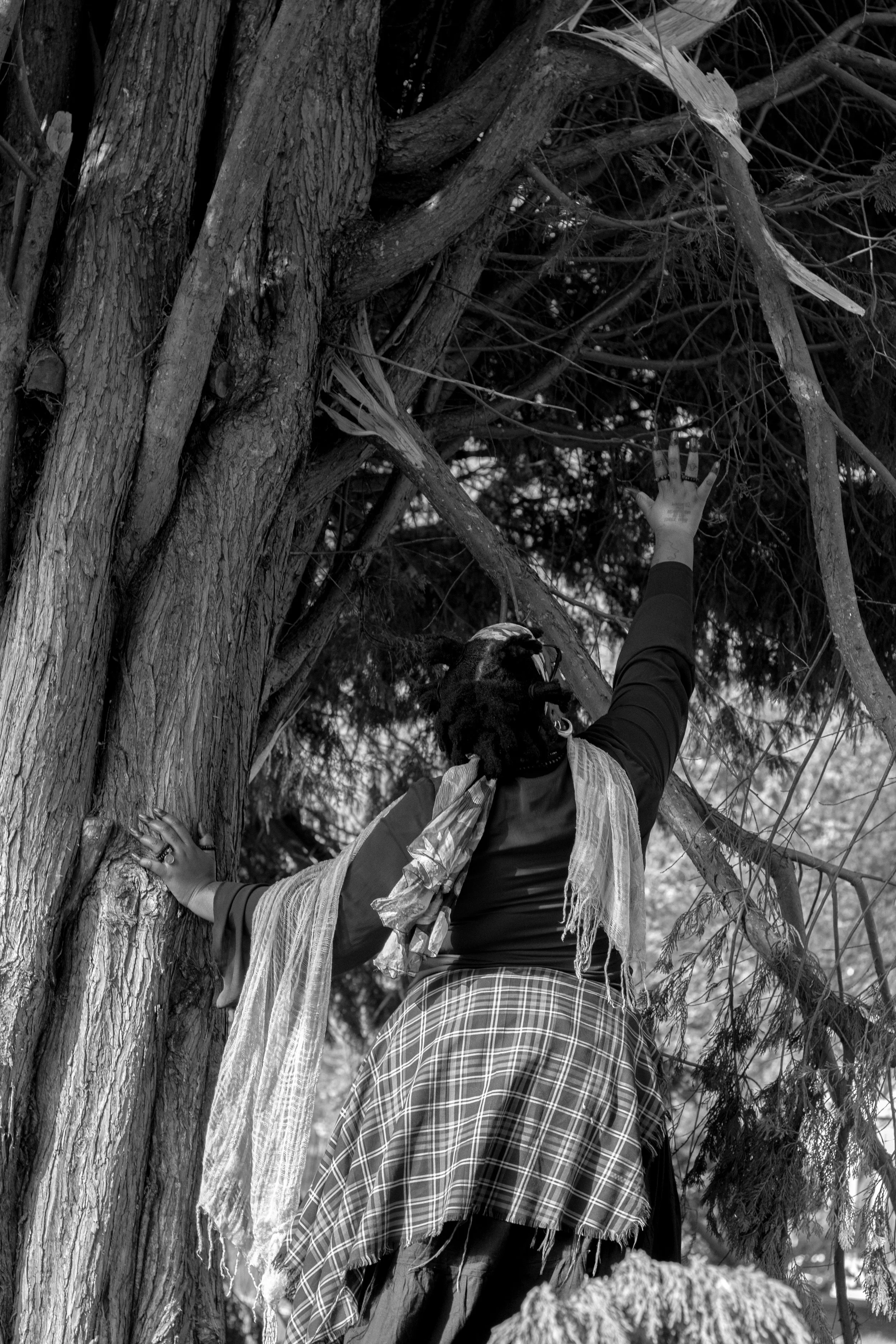
Make no mistake, the climate above the ground is dense. Wealth disparity has become larger and steeper in post-pandemic society. New billionaires are minted every 26 hours, the world’s ten richest men had their wealth double from more than $700 billion to $1.5 trillion, making the daily wealth stolen approximately $1.3 billion a day. At the same time, the first two years of the pandemic saw 160 million more people fall into poverty, and the continued ‘cost of living’ crisis continues to affect vulnerable populations. In October 2023, it was reported that 4.2 million households were going without essentials, and 2.8 million were in arrears with their household bills and on scheduled lending repayments. These conditions of desperate poverty have always hit racialised groups the hardest: 42% of Black African households were in poverty between 2019 and 2022. This poverty is not simply just living on the breadline, but existing in a state of ‘deep and persistent’ poverty. This is only made worse by the fact that in 2023, the Office for National Statistics found that the cost of living crisis affects 47% of Black households who were finding it difficult to afford mortgage payments, and that they’d experience a cost of living crisis at a rate of 1.6% higher than their white counterparts. Predictably, neither ethnicity nor race were flagged as a priority when it came to creating policy to address housing and wealth inequality in England.
Communal solutions to these conditions can feel under-equipped when looking at the landscape as an overarching climate. However, in 2025 nearly 1.6 million UK households were spending more than 50% on their income on housing. What happens when collective housing structures built from strong relational bonds can create alternative routes to economic living and mutual survival, equipped with care, bolstered for conflict and functioning as both sites of relief, resistance and respite?
Individualism has long been the bastion of colonial systems, reclaiming shared resources, labour and relations is deeply rooted within heritages of Black culture of communal village structures. Climates of systemic oppression are accumulations of not just widespread disenfranchisement but the imbricated patterns of collected and repeated violences which hold neglect and profit as the crux and core of their patterns structures. The battle is therefore not against each instance of housing injustice in their hundreds of thousands, (although mobilising against the effects of housing injustice remains critical) but alternative experimentations at which the intersectional attentive care, mutuality and sustainable resourcing are rooted as anti-dotes. Collectives that contain these seeds for growing these viable alternatives look exactly like Blaq Roots, a Black FLINTA housing co-op building and prioritising care-led infrastructures. Blaq Roots receiving multi-year funding to resource their efforts in building community to sustain the place that sustains them is a slow reservoir sustaining the necessary long-term space and time required to build long-lasting relational structures that can counter the fatal urgency of ungrounded and temporary responses to capitalist housing injustices that cannot continue in the long-term. One shoot growing deep enough to offer blueprints that can be shared, resourced and replicated across regions is the beginning of the experimental conditions needed to not only grow living structures of liberation but provide sites of cross-pollination that can be replicated.
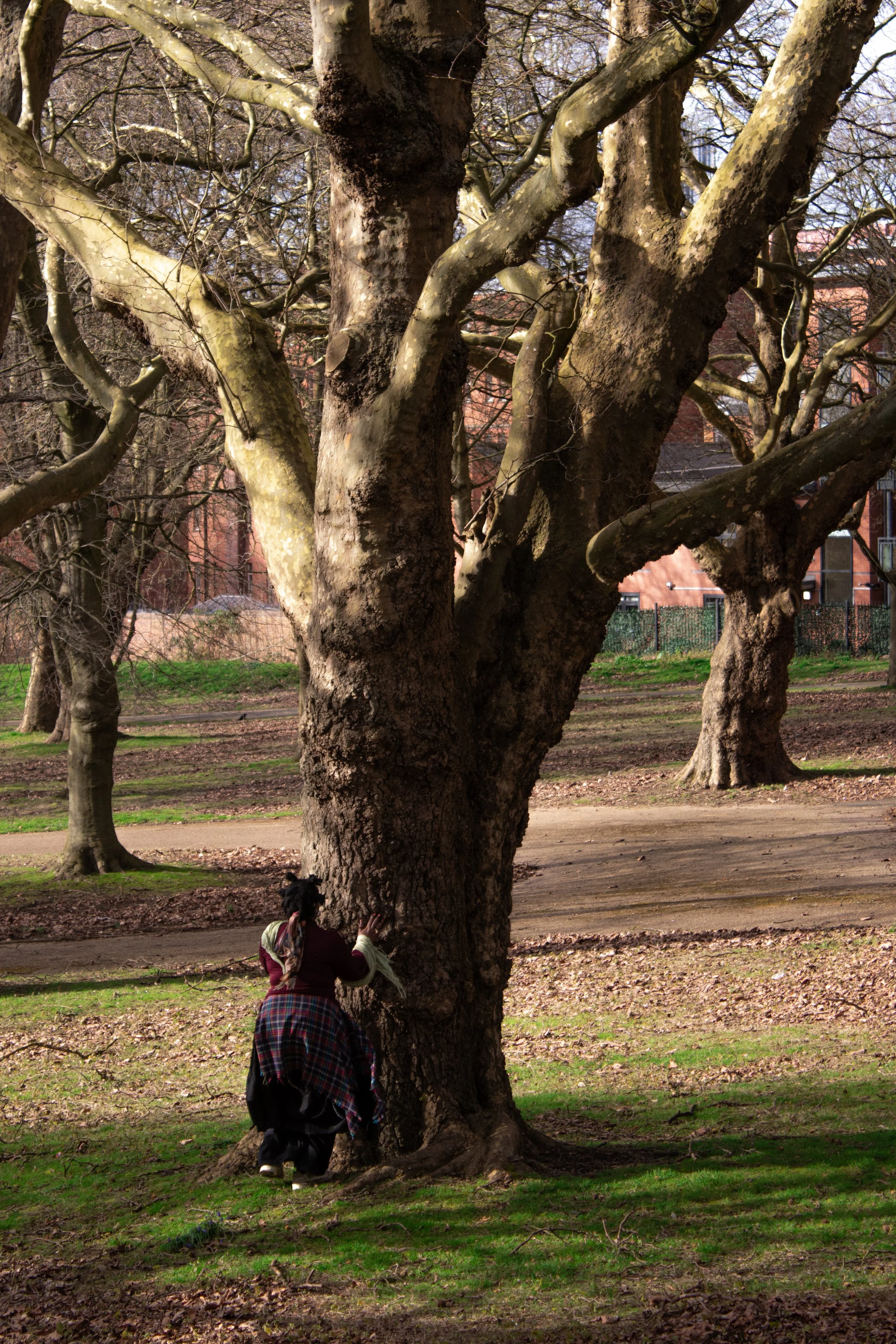
Oftentimes within mainstream movement work, care is discarded as the soft and dispensable side to organising - frivolous, devalued and relegated as work ‘delegated’ to Black femmes, seen as secondary to the fast and visible actions of mobilising and rallying. However, strong relations are the foundation for long-lasting action and stable and secure homes, the irreplaceable gardens from which long-lasting mobilising are grown and organising rooted for when inevitable fragmentation arises. Relation work is resilience work. To this note, it is aligned to say that Blaq Roots’ revolutionary housing journey is running deeply into and against the grief-filled gravity within these current times, using its overwhelming violent force to slowly stretch down deep enough to find nourishing centres of being that can provide liberational communal structures. In this direction, Blaq Roots is holding fast to the sentiment at the root of Audre Lorde’s assertion:
‘Caring… is not … indulgence, it is … preservation and it is an act of political warfare.’
Blaq Roots is in a crucial stage of their journey. They are seeking kin and community, aligned people that are self-aware and communally accountable, dream-driven, care-oriented, brave and radical. They are also seeking legal advice and support for building ownership and co-operative infrastructural support. If this is you or anyone you know please connect with them below. If you are Black FLINTA kin in the UK you may also message any of these accounts for access to the community discord.
Instagram: @blaqrootscoop
Email: blaqrootscoop@gmail.com